
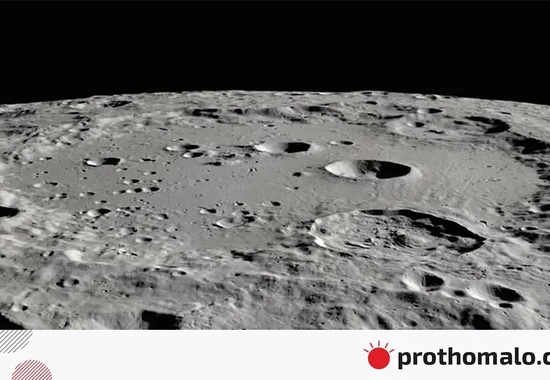
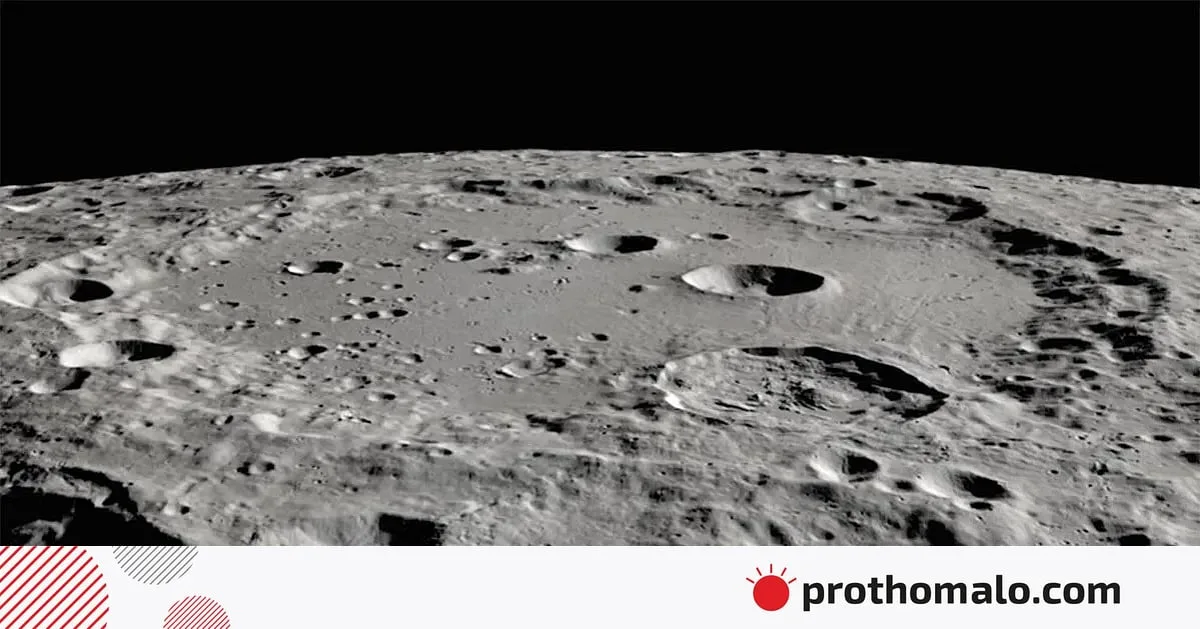
NASA is preparing a mission to learn about the history and underground structure of the mysterious pits on the Moon. The United States space agency said the initiative was launched to find out whether any vast lava tubes or tunnels lie deep beneath the Moon's ancient volcanic regions. The effort is expected to play an important role in identifying natural shelters for astronauts during future space missions and in learning more about the Moon's volcanic history.
According to NASA, the primary goal of the new mission is to collect data from the Marius Hills Pit on the Moon. Located in an ancient volcanic region of the Moon, the pit is roughly 34 metres (111 feet) deep and 65 to 90 metres wide. Although images captured by artificial satellites have confirmed the pit's existence, scientists do not yet have clear and adequate information about whether it is connected to a large underground tunnel or cave.
The project, named Jimli, is being led by the Planetary Science Institute and will use a multisensor approach. It will employ ground-penetrating radar, seismic sensors and a gravimeter, a device used to measure gravity. In addition, cameras will photograph the lunar surface and the exposed walls of the pit. The ground-penetrating radar will help identify structures beneath the Moon's soil, while the seismic sensors will collect information about the characteristics and layers of the rock.
Amanda Hendricks, director and chief executive officer of the Planetary Science Institute, said questions that scientists have long tried to answer from orbit will now be answered by going directly to the Moon's surface. Putzig, a scientist associated with the project, said this will be the first time an active-source seismic method is applied on the lunar surface since the Apollo astronauts. It is hoped that the project will reveal the Moon's subsurface features with greater precision.
Source: NDTV









No comments yet. Be the first to comment!