
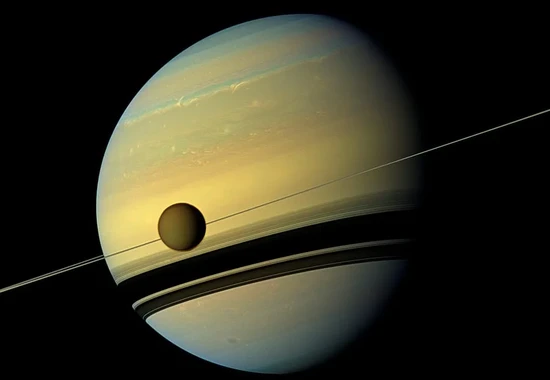


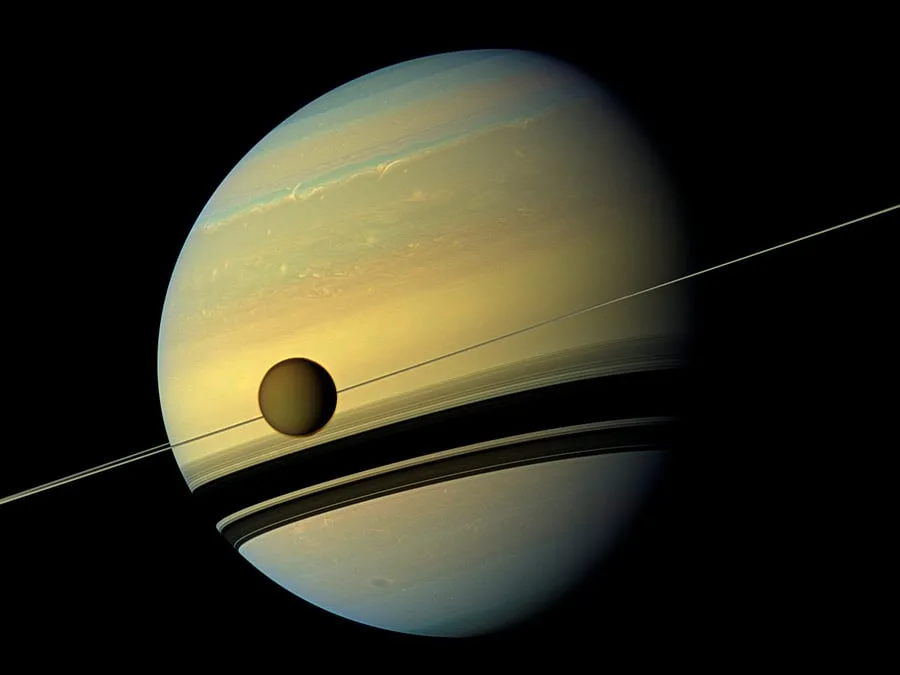
Scientists have long investigated whether life exists anywhere else in the solar system. In a new study, researchers at Germany's Free University of Berlin have found that tiny microbes could survive in the subsurface ocean of Enceladus, Saturn's ice-covered moon. The finding has sparked fresh hope among space scientists and is expected to accelerate the search for extraterrestrial life in the years ahead.
For the new research, the scientists built an artificial replica of Enceladus's subsurface ocean in the laboratory and then tested special bacteria at hydrothermal vents on the simulated seafloor. The study showed the bacteria can survive without oxygen, running their metabolism on hydrogen and carbon dioxide. As a result, the microbes fared far better than expected even in Saturn's extremely hostile environment.
Nozair Khawaja, a scientist at the Free University of Berlin, said the results are astonishing. Enceladus, which is about 500 kilometres in diameter, has a surface temperature that drops below minus 201 degrees Celsius. Even so, geothermal processes in its rocky core keep a vast ocean of liquid water hidden beneath the ice.
Enceladus has fractures at its south pole. Through those cracks, water and ice particles from the subsurface ocean erupt hundreds of miles into the sky. NASA's Cassini spacecraft collected essential chemical components while flying through these ice particles in the past. On this point, scientist Frank Postberg said ancient Earth also had no oxygen and these microbes evolved in exactly that kind of environment. Whether life truly exists on Enceladus is still not confirmed, but this research proves the moon offers an environment where life could take hold. Source: Daily Mail.







No comments yet. Be the first to comment!